#branding #marketing #designstrategy #motiongraphics
Sunday, 12 of April 2026
For brands building attention in crowded digital spaces, this same thinking now shapes how we approach branding and design at Wetton&Co.
We’ve all experienced it. You sit down, the room dims, and the familiar “ta-dum” resonates. Before a single line of dialogue is spoken, you are transported. Whether it’s the gritty, microscopic textures of a crime thriller or the neon-soaked, synth-driven pulse of a sci-fi epic, the title sequence has already told you exactly how to feel. It has established the stakes, the mood, and the visual language of the world you’re about to enter.
At Wetton&Co, we’ve started looking at the landscape of modern branding, specifically social media graphics design, through this exact lens. In an era of infinite scroll and digital fatigue, your brand doesn’t just need a logo; it needs an opening credit. It needs a "Title Sequence" mentality.
For a wider industry view on how motion, identity, and storytelling intersect, it’s worth looking at references from It’s Nice That, Creative Review, and D&AD.
The Challenge
The digital landscape in 2026 is no longer a place of quiet discovery; it is a battleground of fragmented attention. For years, the gold standard for brands was consistency, the idea that if you showed up with the same colours and the same font often enough, you’d win. But consistency without narrative intent is just white noise.
The primary hurdle we see today is what we call "The Static Death Spiral." Brands are pumping out endless streams of static assets that feel disconnected from a larger story. When a consumer encounters a brand on social media, they are subconsciously looking for a reason to stop. If the visual doesn’t immediately establish an atmosphere, the thumb keeps moving.
The modern consumer has developed an internal "Skip Intro" button for anything that feels like a traditional advertisement. Most social media graphics design fails because it tries to sell a product before it has sold a feeling. We’ve noticed that even the most premium brands are struggling to bridge the gap between their high-end physical products and their digital presence. They have a "shelf" presence, but they lack a "screen" presence.

Furthermore, the rise of AI-generated content has flooded the market with a specific type of "perfect" polish that, paradoxically, feels incredibly cheap. It’s robotic, soulless, and lacks the intentional imperfection that defines human craft. Brands are getting lost in a sea of generic excellence, unable to carve out a distinct cinematic identity that feels authored rather than prompted.
That tension is something we’ve explored more directly in "Craft Matters: Why “Human-Made” is the Next Big Luxury Trend", where we unpack why authored design now carries even more value.
The Solution
To solve this, we looked at our studio’s unique intersection of branding and our deep-rooted fascination with film and TV production. We decided to stop treating social media as a gallery and start treating it as a broadcast. We began applying the logic of the title sequence to every brand system we build.
There’s a reason this matters beyond aesthetics: as AIGA continues to champion, design systems work hardest when they create meaning as well as consistency.
Our solution was to develop a framework we call Atmospheric Branding. Instead of starting with a static brand manual, we start by asking: "If this brand had a 10-second opening credit, what would it look like, sound like, and feel like?"
It also connects closely with ideas we explored in "Death of the Brand Guideline: Long Live the Brand World" and "Does a Static Logo Really Matter in 2026? Brand Worlds vs. Logos".
1. The Micro-Narrative Hook
Every piece of social media graphics design must act as a micro-narrative. When we worked on the "Joe Wicks Licensed to Kill" bar packaging, we didn't just think about the shelf; we thought about the "trailer." We leaned into the cinematic drama of the title, using bold, aggressive typography and high-contrast visuals that feel like they belong in a high-stakes action sequence.
2. Motion as a Foundation, Not an Afterthought
In a title sequence, motion is the language. We’ve moved away from "animating a logo" toward "designing with motion in mind." This means considering how light hits a surface, how a texture "bleeds" into the frame, and how typography can reveal itself in a way that feels inevitable. This approach was central to our work with Core Padel Birmingham, where the branding isn't just a mark; it’s an energetic, urban system that pulses with the rhythm of the game.

3. Designing for the "Skip"
Knowing that the audience wants to skip, we design for the first 0.5 seconds. Like the iconic silhouettes in a Bond intro or the creeping vines in Stranger Things, we use "visual anchors": elements so distinctive that they register in the peripheral vision. Whether it's a specific shade of neon or a distressed texture, these anchors tell the viewer they’ve arrived at a Wetton&Co-designed destination.

4. The Human Edge
To combat the AI-generated "uncanny valley," we double down on craft. We integrate hand-sketched elements, raw textures, and "intentional imperfections." In our piece on designing fictional brands, we explored how making something feel "real" often means making it feel slightly weathered. This tactile approach makes a digital graphic feel like it has physical weight: a crucial element for premium social media graphics design.
The Result
By shifting to this title sequence mentality, the results have been transformative for our partners. We’ve moved beyond simple brand recognition and into the realm of brand immersion.
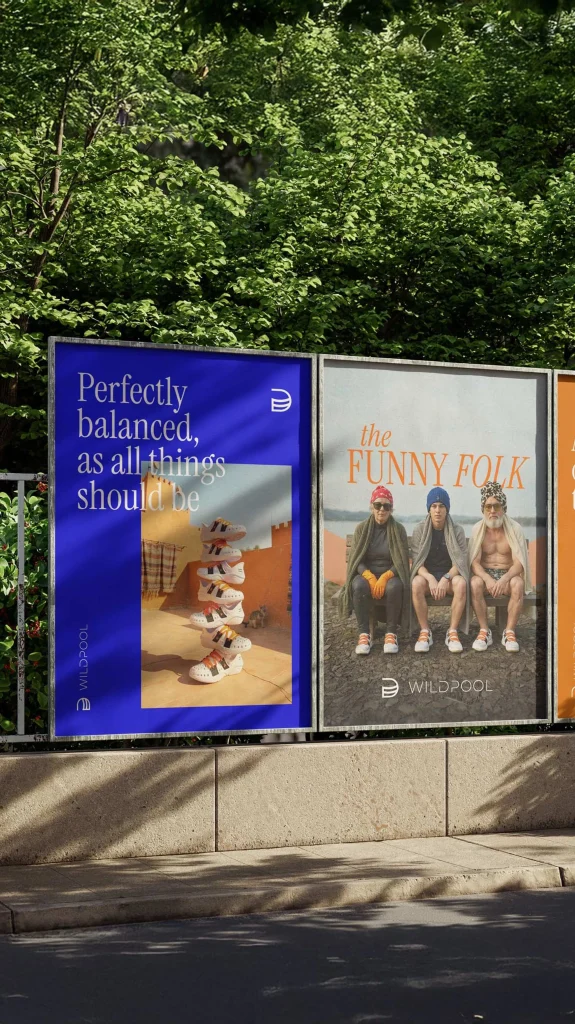
The brands we’ve collaborated with have seen a marked increase in engagement, not just through "likes," but through retention. When a brand feels like a world worth entering, people stay longer. For instance, our work with Wildpool UK used bold, cinematic outdoor marketing that translated perfectly into the digital space. The billboards didn’t just sit there; they commanded the environment, much like a title sequence commands the screen.
That same principle of building a fuller brand world also sits behind "Designing for the Bot: Is Your Brand Ready for AI Search?", where we look at how distinctive brand signals help people — and platforms — recognise you faster.

We’ve found that this cinematic approach specifically elevates the perception of value. When a brand treats its digital presence with the same reverence a director treats an opening credit, the audience subconsciously assigns a higher level of prestige to the product. We saw this clearly with our Sunrise Coffee project, where the visual narrative of the "morning ritual" was captured through atmospheric motion that felt more like a short film than a social post.
Furthermore, this strategy has allowed our clients to be more flexible. A well-designed "title sequence system" is far more adaptable than a rigid brand guide. It allows for "remixable" assets that can pivot across different platforms while maintaining a consistent vibe: even when the specific content changes.
The Outcome
The ultimate outcome of the "Netflix Effect" is a brand that doesn't just exist in the market: it lives in the culture. By treating social media graphics design as a cinematic experience, we’ve helped our partners transcend the noise of the frozen aisle and the clutter of the social feed.
We’ve seen our "From Script to Shelf" philosophy bear fruit across multiple sectors, from healthcare branding to high-end food packaging. The common thread is always the same: a commitment to visionary storytelling and an refusal to settle for the "static."
If you’re reading this as part of the wider series, it pairs naturally with "The AI Backlash: Why 'Intentional Craft' is the New Luxury" and "7 Mistakes You’re Making with Your Brand Identity".

The modern brand is a series of moments. If each of those moments: each post, each video, each ad: is treated as a vital part of a grander opening credit, you create an unbreakable bond with your audience. You aren't just a service or a product anymore; you are a story they are excited to watch unfold.
As we look toward the future of design in 2026 and beyond, we remain convinced that the human hand, guided by a cinematic eye, is the only way to build brands that truly matter. We don't just want to design your logo. We want to direct your intro.
Are you ready to stop being background noise and start being the main event?
At Wetton&Co, we specialise in taking brands from static to cinematic. Whether you’re looking for a complete overhaul of your social media graphics design or a visionary approach to your packaging, we’re here to help you build a brand that demands attention.
Let’s talk about your next project.
Next Project: Beyond the Background: Why Bespoke Packaging is the Unsung Hero of Film & TV