

#BrandingForScreen #ProductDesign #FilmAndTV
January 31, 2026
You're watching your favourite show. The detective opens a cupboard. There's a cereal box. A bottle of wine. A packet of crisps. You don't consciously register them, but your brain does: and if they look wrong, the entire scene falls apart.
That's where we come in.
Most people think "film design" means flashy title sequences or CGI explosions. But the real magic? It's in the bespoke packaging, branding, and product design that lives in the background of every frame. The stuff that makes fictional worlds feel tangible. The hero props that actors interact with. The branded packaging that sits on the shelf behind the lead character's head for exactly 2.3 seconds: but needs to be perfect.
This is the unsung craft of film and TV design, and it's far more strategic than most people realize.
The Problem with "Good Enough"
Here's the thing: audiences are sharp. We're living in an age where viewers pause Netflix to read the label on a beer bottle. Props departments can't just slap a generic mockup on a box and call it a day. The set needs to feel lived-in, authentic, and purposeful: whether it's a gritty crime drama or a glossy period piece.
Generic stock assets break immersion. A product that looks "close enough" reads as lazy on screen. And when production designers are building entire worlds from scratch, every detail counts. The coffee cup. The chocolate bar wrapper. The branded tote bag in the corner of the frame.

A complete fictional world — built beyond the pack.
That's why productions increasingly turn to studios like ours to create fictional brands that feel real. Not just "realistic," but real: complete with strategic positioning, visual hierarchies, and packaging that could sit on a Tesco shelf tomorrow without raising an eyebrow.
When Packaging Becomes a Character
Take our work on Joe Wicks: Licensed to Kill: a Channel 4 project where we designed bespoke protein bar packaging for a fictional health brand. This wasn't background filler. The packaging played a central role in the narrative, appearing in multiple scenes and needing to carry enough brand credibility to support the story.
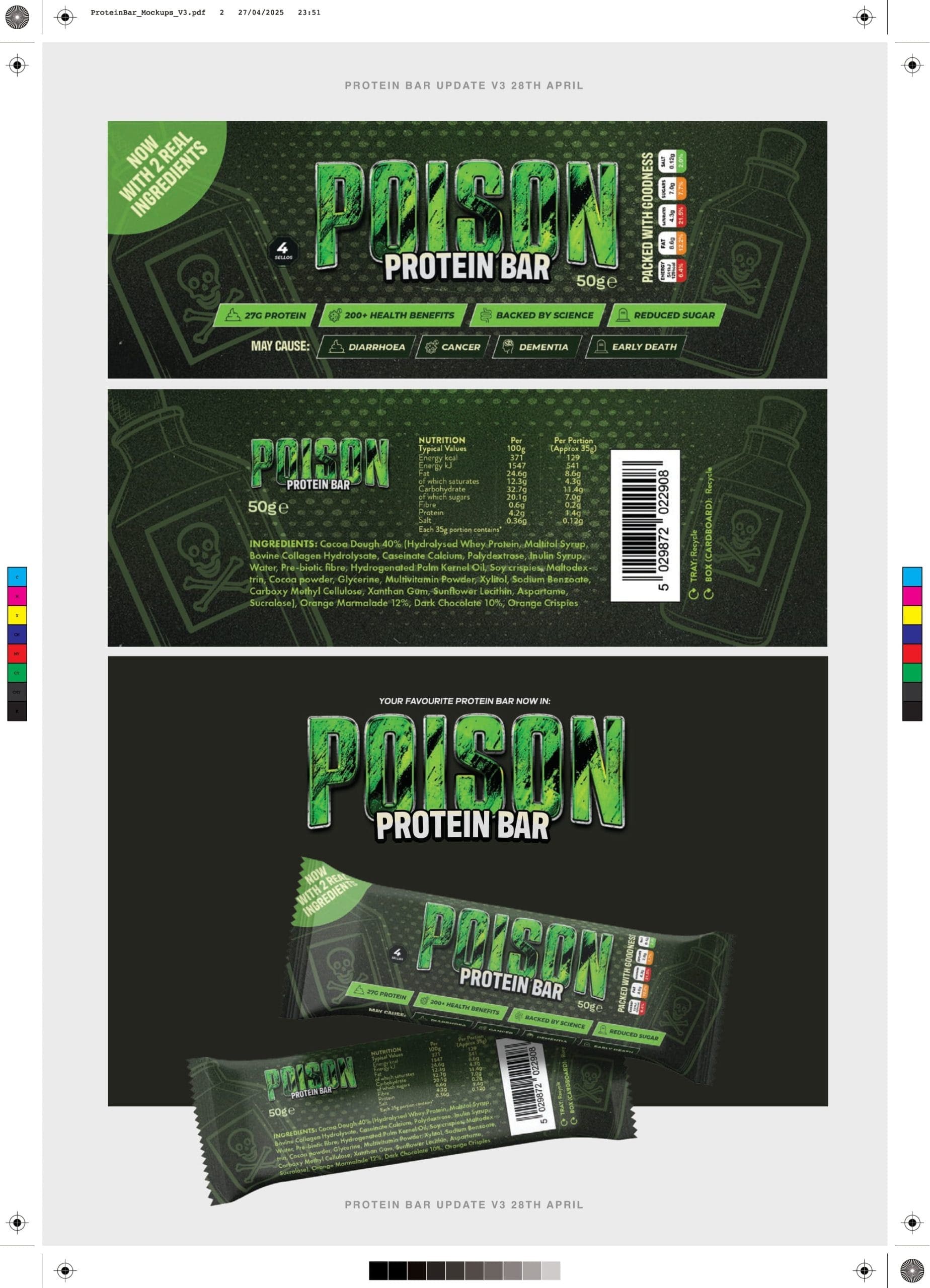
The actual bar — a hero prop with real visual impact.
We approached it the way we'd approach any real-world branding project: defining the target audience, establishing a visual tone, selecting typography that communicated both premium quality and accessible energy. The result? Packaging that looked so legitimate, you'd expect to find it in your local gym's vending machine.
This is what separates decoration from design. The packaging wasn't just pretty: it was strategically grounded in the world of the production. It had to work within the context of health and fitness culture, reflect Joe Wicks' recognisable brand energy, and look natural in the hands of talent. That requires understanding not just design, but branding, consumer psychology, and production logistics.
The Strategic Importance No One Talks About
Here's what most people miss: bespoke packaging for film and TV isn't just about looking good on screen: it's about world-building at a level that earns audience trust.
Productions are investing more in this than ever, and it's driven by a few key factors:
Authenticity as Currency : Audiences demand believable worlds. One poorly designed box of cereal can shatter suspension of disbelief. Conversely, a fully realised fictional brand can become iconic. Think of Duff Beer from The Simpsons or Brawndo from Idiocracy: these started as props and became cultural touchstones because the design was committed.
Legal Necessity : Real brands charge eye-watering fees for product placement, and even then, you're beholden to their brand guidelines. Creating fictional products gives productions full creative control and eliminates licensing headaches. As Channel 4 continues to invest in bold, original programming, the demand for bespoke on-screen branding has never been higher.
Collector Appeal : As the British Film Institute has noted in their analysis of film memorabilia trends, props and packaging from major productions are increasingly valuable to collectors. When packaging is designed to the same standard as a commercial product, it holds up as a tangible artifact long after the show wraps.
World-building scale — the brand lives outside the frame.
Budget Efficiency : Here's the counterintuitive bit: investing in high-quality bespoke design upfront often saves productions money. A well-designed set of packaging mockups can be adapted across multiple episodes, seasons, and even spin-offs. It scales. Generic stock assets need constant replacement and never quite look right.
The Process: How We Build Fictional Brands
When we take on a project like this, we're not just "making it look nice." We're building a fully functional brand system that happens to exist only on screen.
The process mirrors commercial branding work:
: Strategic Positioning : We start by defining the brand as if it were launching tomorrow. Who's the target customer? What's the product promise? What does it say about the character who uses it?
: Visual Identity Development : Logomarks, typography systems, colour palettes: all built to feel cohesive and market-ready. We explore multiple directions, iterate ruthlessly, and ensure the final design can hold up under 4K scrutiny.
: Packaging Design and Print Specifications : This is where production experience matters. We deliver print-ready files optimised for whatever printing method the props team uses: whether that's traditional offset, digital, or even hand-finishing for hero props. We account for materials, folding, and how talent will interact with the product on set.
: Adaptability Across Formats : The same brand might need to live on a box, a label, a billboard in the background, and a website mockup. We build systems that flex without losing coherence.
This level of detail ensures that when the camera rolls, nothing pulls focus for the wrong reasons. The packaging simply works: which is exactly the point.
Why This Craft Deserves More Credit
The best design is invisible until you notice it. Then you can't un-see it.
That's the paradox of bespoke packaging for film and TV. When it's done right, audiences don't consciously register it: they just believe the world. But when it's done poorly, or skipped entirely, the seams show. The magic breaks.
We've worked across branding, packaging, and product design for both commercial clients and productions, and the bar is the same: obsessive attention to detail, strategic thinking, and an understanding that design does something. It communicates. It persuades. It builds worlds.
Consistency across touchpoints — the world feels real.
If you're a production designer, art director, or creative lead working on a project that demands this level of craft, we'd love to collaborate. Check out more of our work to see how we approach branding across industries: and how we bring that same rigor to the screen.
Got a production that needs packaging, branding, or product design that holds up under the camera's scrutiny? Let's talk. Whether it's hero props, background branding, or an entire fictional product range, we approach every project with the same strategic backbone: make it real.
Drop us a message. We're ready to build your world.

