Category: #Branding #DesignTrends #Strategy
Date: 12 April 2026
Photo by Annie Spratt on Unsplash.
The digital landscape of 2026 is, quite frankly, too perfect. We have reached a point where generative AI can produce high-fidelity visuals in seconds: symmetrical, polished, and mathematically optimised. But as a branding agency focused on visionary growth, we’ve noticed a profound shift in how audiences respond to this "perfection."
Consumers aren't just bored; they’re suspicious. In a world of algorithmic output, perfection has become a red flag for "fake." The new luxury isn't found in the flawless gradient or the perfectly centered logo; it’s found in the human hand. We are witnessing a massive cultural pivot toward "Intentional Imperfection": a deliberate embrace of the raw, the tactile, and the beautifully broken.
The Challenge: The Homogenization of Everything
For the past two years, the industry was obsessed with speed. AI allowed brands to scale content at a terrifying rate, but it came with a hidden cost: catastrophic homogenization. When everyone uses the same prompts and the same underlying models, every brand begins to look like a cousin of the other.
We saw it happening across every sector: identical colour palettes, smooth-as-glass textures, and a lack of soul. At Wetton&Co, we realised that the more "perfect" a brand looks, the less it resonates. Our brains are wired to look for the "glitch" that proves a human was there. Without it, the emotional connection simply vanishes.

Photo by Olia Gozha on Unsplash.
In our local creative hub of Brighton, this backlash is particularly visible. Brighton has always been a city of makers, misfits, and DIY culture. From the graffiti in North Laine to the independent boutiques that define our streets, the vibe here is inherently tactile. As a Brighton-based branding agency, we’ve seen that the brands thriving in 2026 are those that lean into this local spirit of unpolished authenticity. They aren't trying to out-calculate the AI; they’re trying to out-feel it. For brands navigating that shift, our approach to branding and design is built around making that human edge visible.
The Solution: Craft Over Code
We decided to stop fighting for "perfect" and start fighting for "real." Our approach shifted from purely digital execution to a hybrid workflow where we use technology as a tool, but never as the final curator. We’ve brought back the sketchbook, the linocut, and the photocopier.
Intentional Imperfection isn't about being messy for the sake of it. It’s a highly strategic choice to include visual evidence of the creative process. It’s about the waver in a hand-drawn line, the grit of a scanned texture, or the "incorrect" spacing of a letter that makes a word feel like it was stamped by a human.

Photo by Luis Villasmil on Unsplash.
Take our work on the "Poison Protein Bar" concept. In a sea of clean, clinical health snacks that all look like they were designed by the same medical algorithm, we went the opposite way. We utilized distressed typography, skull iconography, and a layout that felt more like a scientific warning label than a snack bar.
The bold, distressed green lettering and the "print proof" marks weren't accidents: they were deliberate markers of craft. By embracing a raw, unconventional aesthetic, we created something that stops the scroll. It feels dangerous, it feels edgy, and most importantly, it feels like it was built by a person with a specific vision, not a prompt. That thinking sits in line with wider conversations across the industry too — from It’s Nice That to Creative Review — where craft, authorship, and originality are increasingly becoming part of the brand story again.
The Result: The New Luxury is Evidence of Work
Luxury in 2026 is no longer about being "clean." It’s about provenance. High-end consumers now want to know how something was made. They want to see the brushstrokes. They want to feel the texture of the paper.
When we work with clients, we now highlight the "intentional flaws" in their brand systems. We’ve found that:
: Visible grit creates a sense of history and stability.
: Analog textures (like paper grain or ink bleed) provide a tactile "anchor" in a digital world.
: Asymmetry creates a dynamic energy that AI struggles to replicate authentically.
That balance between polish and personality is something institutions like Pentagram and Design Week continue to reinforce: the brands people remember rarely feel machine-smoothed.

Photo from Unsplash.
Our own brand identity at Wetton&Co leans into this. We use dynamic, high-contrast visuals: like the sunset-lit ocean textures: to bridge the gap between the natural and the digital. The way the light hits a wave is unpredictable; it’s messy and beautiful. By overlaying our clean logomark on these raw textures, we communicate a balance between strategic rigor and organic creativity.
The Outcome: A "Human Edge" for Modern Brands
The brands that will survive the next five years are those that realize they aren't just selling a product: they are selling a human connection. We are helping our partners move away from 100-page rigid brand guidelines toward flexible design systems. These systems allow for "remixing": they encourage the brand to breathe and change depending on the medium.

Photo by sydney Rae on Unsplash.
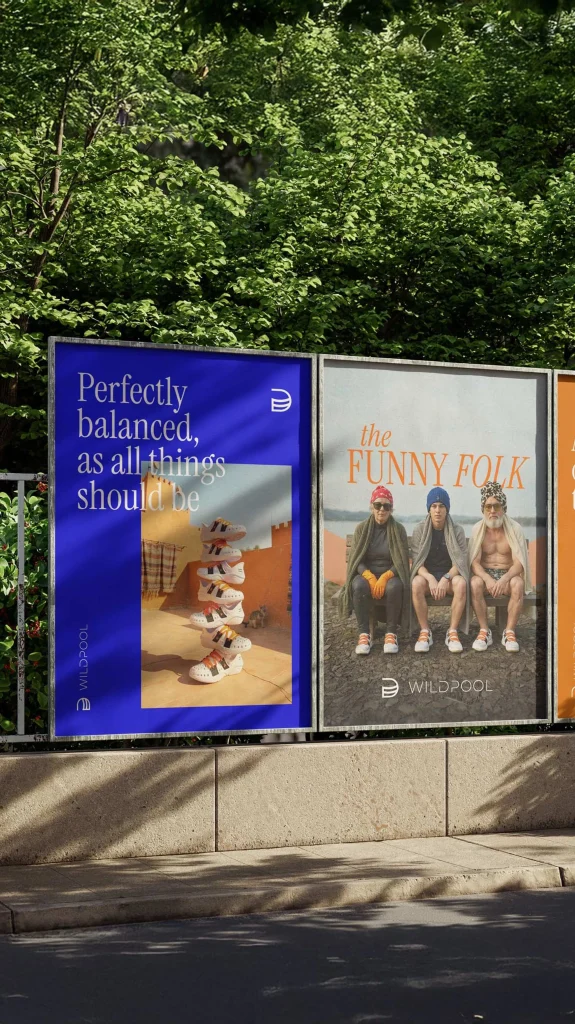
Consider our campaign for "Wildpool UK". The core message: "Wild Soles, For Wild Souls": demanded a visual language that felt as untamed as the water itself. We didn't use a clean, corporate typeface. We chose striking typography that felt weather-beaten and silhouetted against the natural chaos of a sunset. It’s inspirational because it feels attainable and real. It’s not a polished studio shot; it’s an invitation to an experience.
Why Every Branding Agency Must Pivot
If you aren't building "the human" back into your work, you are effectively a commodity. AI can do "nice." It can do "neat." But it cannot do "intentional." It cannot decide that a specific smudge on a logo is the exact thing that will make a customer trust a brand.
At Wetton&Co, we are leaning into the "Artisan Soul." We use AI to generate 500 rough ideas in an afternoon, but then we take those ideas into the physical world. We print them out, we scrunch the paper, we draw over them with charcoal, and we scan them back in. That layering of human intent is what creates a brand that people actually care about.

Photo by su fu on Unsplash.
Even in high-impact retail branding, like our work for "English Cheesecake Co", the focus is on the sensory experience. We use magnifying-glass-level detail to ensure that every typographic choice and colour pop feels deliberate and high-energy. It’s about making the consumer feel the zing of the lemon through the visual alone.
Moving Forward
The "AI Backlash" isn't a rejection of technology; it’s a maturation of it. We are finally learning that technology should be the stage, not the lead actor. As we move further into 2026, the brands that win will be those that dare to be imperfect. They will be the brands that show their work, admit their humanness, and celebrate the beautiful, chaotic mess of real life.
We don’t just build brands; we build legacies that feel alive.
If you're ready to move away from the "algorithmic average" and create something that carries the weight of true craft, let’s talk. Whether you’re a Brighton startup or a global disruptor, we’re here to help you find your human edge.
Ready to start your next project?
Work with Wetton&Co
Related in this series:
— Craft Matters: Why “Human-Made” is the Next Big Luxury Trend
— Death of the Brand Guideline: Long Live the Brand World
— Does a Static Logo Really Matter in 2026? Brand Worlds vs. Logos
Next Project: Designing for the Bot: Is Your Brand Ready for Agentic AI?