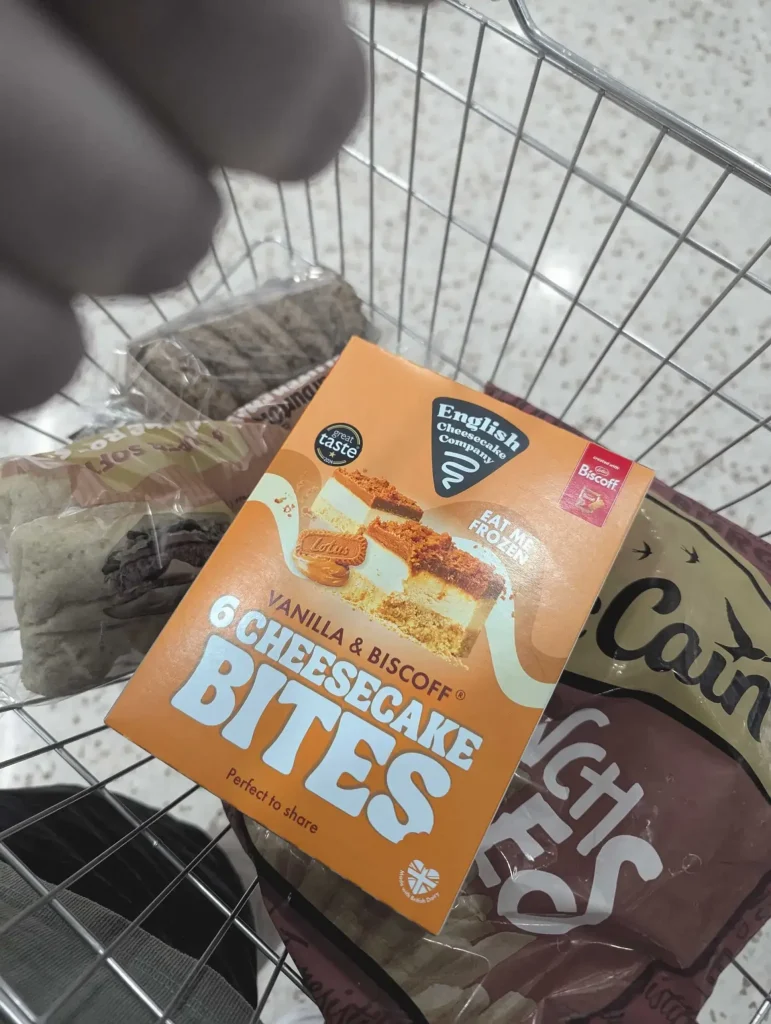
The best fictional brands don't feel fictional at all. They sit on shelves in frame backgrounds, they're clutched in actors' hands, they flash across screens: and for a split second, your brain doesn't question whether they're real. That's the point.
We've spent years creating brands that exist only within the world of a production, but feel as authentic as anything you'd find in a supermarket. It's a strange design challenge: build something believable enough to disappear into the story, but compelling enough that it enriches the world-building when someone does notice it.
Here's how we do it: and why getting fictional brands right matters more than most people think.
The Two Types of Fictional Brands (And Why We Care About Both)
Not all fictional brands serve the same purpose. In the world of film and TV production design, they fall into two camps: hero brands and background brands.
Hero brands are the stars. They're scripted, memorable, and central to the plot or character development. Think of the fictional soft drink a character is obsessed with, or the shady corporation logo that appears in every episode. These brands need personality, recognition, and often a touch of satire or exaggeration that makes them more memorable than a real brand would be.
Background brands are the glue. They populate the universe quietly: filling shop shelves, appearing on billboards, tucked into kitchen cupboards. They exist to make the world feel lived-in and real, without pulling focus. These brands need to feel authentic enough that audiences don't question them, but understated enough that they blend seamlessly into the production's aesthetic.
We design for both. And while the goals differ, the principles remain the same: authenticity, consistency, and strategic thinking. Every fictional brand we create follows exactly the same design rigour as a real-world brand: because if it doesn't, audiences will feel it, even if they can't articulate why.

Why Fictional Brands Are More Than Set Dressing
There's a term in the industry: defictionalisation. It's what happens when a fake brand becomes so believable, so culturally embedded, that it crosses over into the real world. Bubba Gump Shrimp Co. from Forrest Gump. Dunder Mifflin Paper from The Office. Wonka Candies. All started as fictional brands: and all became commercial entities because they were designed with the same care, strategy, and emotional resonance as actual products.
That's the bar. And while not every fictional brand we create is destined to become a real-world franchise, we approach each one as if it could be. Because the brands that feel real enough to remember are the ones that serve the story.
According to Creative Review, the best fictional brands function as "meticulously designed, multi-dimensional elements that enrich storytelling." They're not decoration. They're tools for immersion, character development, and world-building. When we design a fictional product for a production, we're answering questions: What does this brand say about the world it exists in? What does it tell us about the character holding it? How does it reinforce the tone, time period, or visual language of the production?
Our Process: Building Brands That Don't Exist (But Should)
We start every fictional brand project the same way we'd start a real one: with strategy. Who is this brand for? What's its Unique Selling Proposition? What's its history, its tone, its place in the market: even if that market is imaginary?
The difference with fictional brands is that we have permission to push things slightly off-kilter. A real brand has to navigate legal constraints, competitor positioning, and consumer expectations. A fictional brand can have something inherently wrong with it: a name that's slightly too on-the-nose, a tagline that's just absurd enough to be funny, a design that satirises real-world trends. That's where the fun lives.
But here's the trick: even when we're being playful, we're being precise. The joke only lands if the brand looks legitimate. Satire requires authenticity as its foundation.
Case Study: Joe Wicks and the Licensed to Kill Bar
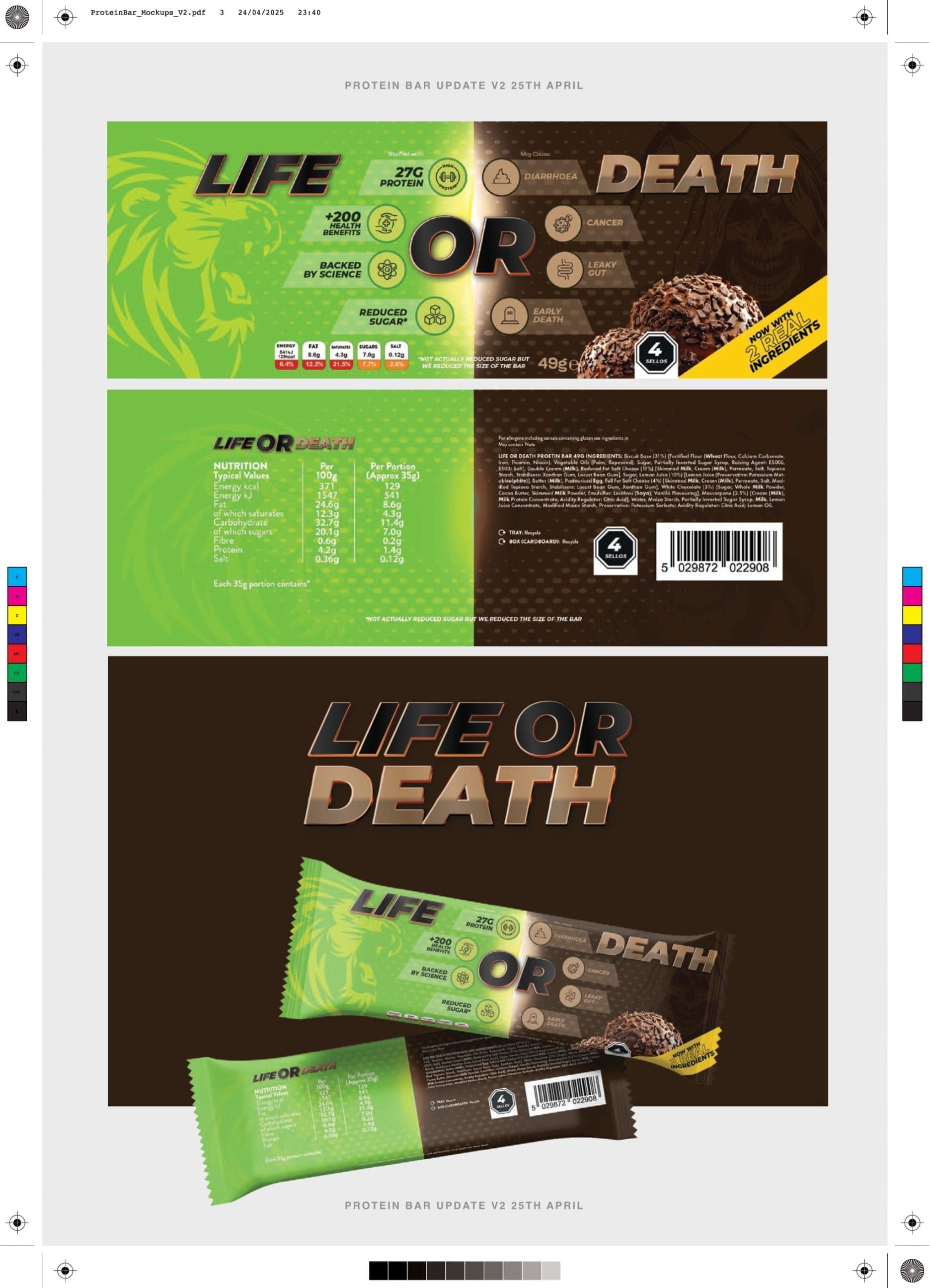
One of our favourite examples of this is the work we did for Joe Wicks' Licensed to Kill bar packaging: a fictional product created for film and TV production use. You can see the full project here.
The brief was clear: design packaging for a high-protein snack bar that felt premium, playful, and completely believable as something you'd find in a convenience store. It needed to sit comfortably within the production's world: modern, health-conscious, slightly cheeky: while also feeling like a real brand Joe Wicks might actually launch.
We approached it like any branding project. We explored typography that balanced boldness with readability. We experimented with colour palettes that signalled health and energy without feeling generic. We designed a logo system that could flex across formats: packaging, point-of-sale, digital mockups. And crucially, we obsessed over the details: nutrition labels, barcodes, ingredient lists, taglines. All the tiny design elements that make a product feel tangible.
The result? Packaging that disappeared into the scene: because it looked like it belonged there. And that's the ultimate compliment for a fictional brand.
The Principles We Follow (Even for Things That Aren't Real)
Whether we're designing for a blockbuster film or an indie production, these are the principles that guide our work on fictional brands:
1. Consistency is everything.
If a brand appears multiple times throughout a production: on different props, in different scenes: it needs to feel like the same brand. That means a cohesive visual system: logo usage, typography, colour palette, graphic language. We build full brand guidelines for fictional brands, just as we would for real clients. Because inconsistency breaks immersion.
2. Details sell believability.
It's the small things that make a brand feel real. The kerning on a label. The hierarchy of information on a package. The choice of material or finish. Audiences might not consciously notice these elements, but their brains do. We treat every touchpoint: no matter how brief its screen time: as an opportunity to reinforce authenticity.
3. Context drives design.
A fictional brand for a dystopian sci-fi series needs different design language than one for a period drama. We research the aesthetic, time period, and cultural context of the production's world, then design brands that feel native to that universe. If it's set in the 1980s, we lean into design trends from that era. If it's futuristic, we extrapolate where branding might go. The brand has to make sense within its narrative context.
4. Start with strategy, not aesthetics.
Just like a real brand, a fictional brand needs a reason to exist. What's its positioning? Who's its target audience (within the fictional world)? What does it stand for? These strategic questions shape every visual decision we make. A brand without strategy is just a pretty logo: and pretty logos don't hold up under the scrutiny of a 4K camera.

**Poison — the nutritional label and barcode are the world-building.
**Joe Wicks "Licensed to Kill" — world-building you can hold—then believe.
**Joe Wicks "Licensed to Kill" — credibility lives in the barcode-and-nutrition layer.
The Intersection of Craft and Storytelling
What makes fictional brand design so satisfying is that it sits at the intersection of commercial design and narrative art. We're borrowing from both worlds. From the commercial side, we bring precision, strategic thinking, and an understanding of how brands function in the real world. From the narrative side, we bring flexibility, playfulness, and the freedom to serve a story rather than a quarterly sales target.
The Art Directors Guild has long recognised the importance of graphic design in production design: because on-screen branding isn't just about filling space. It's about creating visual credibility. When the brands in a production feel authentic, the world feels more lived-in. The stakes feel higher. The immersion deepens.
And when a production gets it wrong: when a fictional brand feels lazy or generic or obviously fake: it pulls audiences out of the story. That's why production designers, art directors, and set decorators increasingly bring in specialists to handle on-screen branding. Because the details matter.
Why We Love This Work
Designing fictional brands scratches a particular creative itch. It's branding without the constraints of market research, legal clearances, or focus groups. But it still demands rigor, consistency, and strategic thinking. It's the best of both worlds: creative freedom within a disciplined framework.
And there's something deeply satisfying about creating something that feels so real, people assume it is. We've had crew members ask where they can buy products we've designed for productions. We've seen our fictional packaging designs shared on social media by fans trying to figure out if the brand actually exists. That's the goal. That's how we know it worked.
If you're working on a production and need bespoke packaging, product design, or on-screen branding that feels as real as the script, we'd love to talk. Check out more of our work: real and imagined: and let's build something that doesn't exist yet, but absolutely should.