Branding / Strategy / 24 February 2026
There's a question we ask during every kickoff call, and it makes clients pause: "Where do you see this brand in ten years?"
Not next quarter. Not next year. Ten years.
Most briefs arrive focused on the immediate, launch dates, campaign windows, the next funding round. But we've found that the brands that endure, the ones that build genuine equity and command premium positioning, are designed with a horizon that extends far beyond the next trend cycle.
We're designing for 2036 because that's the timeline required to build something that matters.
The Trend Trap
The design industry has a metabolism problem. Platforms like Instagram and Behance reward novelty. Gradients go viral, then brutalism, then Y2K nostalgia, then whatever's next. Clients see these trends and assume their brand needs to reflect them to stay relevant.
But here's what we've learned over hundreds of projects: trend-led design has a built-in expiration date.
When you design to capture a moment, you're designing for obsolescence. The visual language that feels fresh today will feel dated in eighteen months. Then you're redesigning, repositioning, confusing your audience, and starting from zero on brand recognition.
We're not interested in that cycle.
The brands we admire, the ones with genuine staying power, were never chasing what was happening around them. They defined their own visual territory and defended it across decades. Think about the identities that have lasted: they're rooted in strategic clarity, not stylistic trends.
That doesn't mean designing conservatively. It means designing with intention that transcends the moment.
What 10-Year Thinking Actually Looks Like
Designing for a decade doesn't mean creating something static or boring. It means building a visual system with enough flexibility to evolve without losing its core identity.

When we developed the identity for Core Padel, we weren't designing for where padel is today, we were designing for where it's going. The sport is exploding across the UK, transitioning from niche to mainstream. The brand needed to work equally well on a neighbourhood court in 2025 and a national broadcast partnership in 2035.
The logomark is bold and geometric, rooted in the structure of the court itself. It's not chasing sports branding trends, the aggressive angular styles or the retro athletic nostalgia that's popular right now. Instead, it establishes its own visual language: clean, confident, owning the geometry of the game.
That geometry becomes the system. It scales across environmental graphics, digital platforms, merchandise, and broadcast. It's flexible enough to evolve as the brand grows, but grounded enough that it's unmistakably Core Padel in any context.
This is 10-year thinking: build the foundation strong enough to support everything that comes next.
Bold Doesn't Mean Trendy
There's a misconception that long-term brand thinking means playing it safe. That designing for longevity requires muted palettes and timid typography.
We reject that entirely.

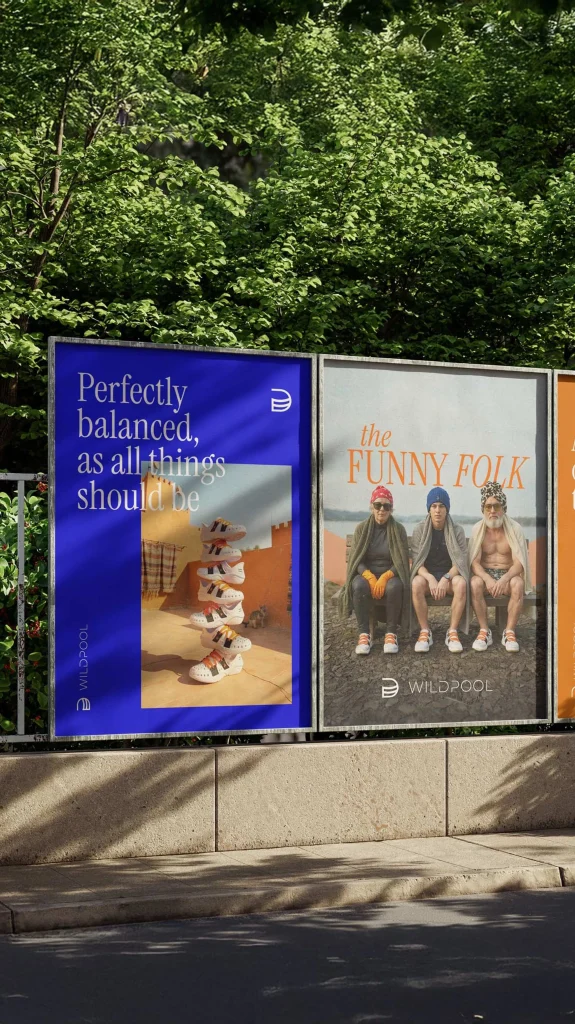
Wildpool is one of our boldest identities, and it's designed to last a decade. The brand challenges the wellness industry's obsession with cold water therapy as performance optimization, it's about reconnecting with something primal, not hacking your biology.
The visual identity is unapologetically vibrant. Electric blues, deep oranges, bold typography that demands attention. The kind of system that stops you mid-scroll.
But look closer: the colour palette isn't trend-driven, it's psychologically strategic. Those blues evoke cold, depth, the visceral shock of immersion. The warmth of the orange balances it, grounding the system in approachability. The typography is strong but clean, avoiding stylistic flourishes that will date.
The outdoor campaign we designed carries that same tension: bold imagery, stripped-back messaging, visual confidence. "Perfectly balanced, as all things should be" isn't a tagline that expires. It's a brand philosophy made visible.

This identity will work as effectively in 2036 as it does today because it's rooted in strategic clarity, not aesthetic trends. The boldness isn't decoration, it's the brand's point of view made tangible.
The Compound Effect of Consistency
Here's what happens when you commit to a 10-year brand system:
Year one, you're building recognition. The identity is new, unfamiliar. You're teaching your audience what you stand for visually.
Year three, patterns are forming. People start to recognize you before they read your name. The visual language is doing the work.
Year five, you have equity. Competitors have cycled through two or three rebrandings. You've been consistent, iterating within your system rather than abandoning it. That consistency compounds into trust.
Year ten, you own your category visually. You're not following trends, you're the reference point others are following.
This is why we ask about 2036. Because brand equity isn't built in quarters, it's built in decades.
The research backs this up: meaningful brand recognition requires sustained, consistent investment. A three-year brand build establishes positioning. A ten-year horizon allows for maturation, diversification, and the kind of deep market penetration that creates lasting competitive advantage.
But you can't get there by redesigning every time a new aesthetic goes viral on design Twitter.
How This Changes Our Process
Designing for a 10-year horizon fundamentally shifts how we approach every project.
We're not asking "What's working right now?" We're asking "What will still be true about this brand in 2036?"
That question forces clarity. It strips away the noise, the reactive design thinking, the temptation to follow what's popular. It demands that we root every visual decision in strategic territory that transcends the moment.
It also changes how we build brand systems. We're not delivering a logo and a style guide: we're delivering architecture. Modular systems that can flex and scale. Guidelines that empower rather than restrict. Visual languages that grow with the business without requiring a complete overhaul every few years.
When we delivered the Core Padel identity, we weren't just thinking about the Birmingham venue. We were designing for franchising, for national expansion, for partnerships we couldn't yet predict. The system needed to be strong enough to anchor that growth.
When we built Wildpool, we weren't designing for launch: we were designing for the moment they scale from a challenger brand to a category leader. That requires thinking beyond the immediate.
The Long Game
The most successful brands we've worked with are the ones willing to play the long game. They understand that building a brand is not a campaign: it's a commitment.
That commitment means resisting the urge to chase every new design trend. It means trusting that strategic clarity and visual consistency will compound into something far more valuable than momentary relevance.
It means designing for 2036.
We're not saying every brand needs to look the same for ten years. Visual languages evolve: typography refines, palettes expand, photography styles shift. But those evolutions should happen within the system, not as wholesale replacements of it.
The brands that last aren't the ones constantly reinventing themselves. They're the ones that knew what they stood for from the beginning and had the discipline to stay the course.
If you're building a brand designed to last: not just launch: let's talk. We'll start with 2036 and work backwards.