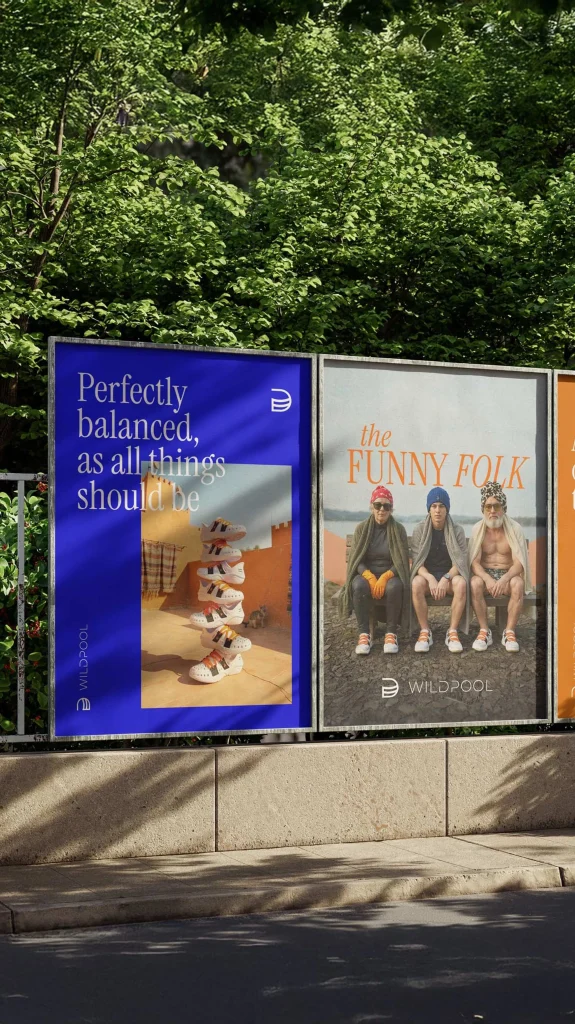
Photo by Second Breakfast on Unsplash
Branding | Published 23rd February 2026
There's a quiet rebellion happening in 2026 branding, and it's not what you'd expect. While AI tools have never been more sophisticated: generating flawless gradients, perfect symmetry, and mathematically optimised colour palettes in seconds: the brands cutting through are the ones deliberately breaking that perfection.
We're watching a fundamental shift: the human edge is back. Not as a nostalgic gimmick, but as a strategic response to visual fatigue. Audiences have developed what we call "AI-vision": the ability to spot algorithmically generated content from a mile away. And increasingly, they're choosing to look past it.
At Wetton&Co, we've been leaning into distressed typography, tactile textures, and hand-crafted imperfection for years: not because it's trendy, but because it works. This isn't about rejecting technology. It's about understanding what humans respond to when they're drowning in polished, frictionless visual noise.
Why Perfect Stopped Working
Let's rewind. For the past few years, the design industry chased a specific aesthetic: hyper-clean, gradient-heavy, impossibly smooth. AI image generators trained on millions of stock photos spat out visuals that looked "professional" in the most generic sense. Brands embraced it because it was fast, scalable, and safe.
The problem? It all started looking the same.
When every smoothie brand, fitness app, and DTC startup uses the same AI-generated pastel gradients and sans-serif lockups, differentiation dies. Consumers: especially Gen Z and Millennials who grew up online: started craving texture, grit, and proof that a human actually made something.
We saw this shift accelerate in 2024, and by 2026, it's undeniable. Leading platforms like Instagram and TikTok now require AI-generated content to be labelled, and studies show that when consumers are making important decisions: choosing a food brand, booking a service, investing in a product: they actively prefer human-created content. The tactile, the imperfect, the real.
Photo by Iuliia Pilipeichenko on Unsplash
The Ingredients of Human-Centric Design
So what does "human-centric" actually mean in practice? It's not about abandoning grids or ignoring brand guidelines. It's about strategic imperfection: introducing elements that feel touched, worn, or made by hand, even when they're digitally executed.
Here's what we're building into our brand identity strategy work:
Hand-drawn icons and illustrations : Brush strokes that aren't perfectly smooth. Line weights that vary. Shapes that don't quite close. These micro-imperfections signal humanity.
Distressed typography : Letterforms with texture, grain, or intentional degradation. Think stamped, screen-printed, or weathered. The kind of type that looks like it's been somewhere, not just generated in Figma.
Organic shapes and asymmetry : Breaking the rigid grid. Letting elements breathe unevenly. Embracing negative space that isn't mathematically optimised.
Visible texture : Paper grain, canvas weave, brushed metal, or fabric patterns. Surfaces that suggest a physical material, even in digital spaces.
Typographic quirks : Subtle character adjustments, custom ligatures, or intentional awkwardness that makes a typeface feel ownable rather than off-the-shelf.
This isn't decoration. It's differentiation. In a sea of algorithmic sameness, these details become brand signatures.

Case Study: Poison Protein Bar
One of our favourite examples of this approach is our concept work for Poison Protein Bar: a project that embodies everything we're talking about.
The brief was deceptively simple: create packaging for a protein bar that didn't look like every other protein bar. The category is saturated with clean, clinical designs: white backgrounds, sans-serif fonts, health halos everywhere. It's the land of AI-friendly design, optimised for Amazon thumbnails and algorithmic approval.
We went the opposite direction.
Bold, distressed green lettering stamped across a black background. Skull-and-crossbones iconography. A layout that borrowed from vintage poison labels and mock-scientific packaging. We layered texture into every typographic element: chipped paint, rough edges, ink bleed. The design looked like it had been printed in a basement lab, not generated by a machine.
The back panel pushed further. Instead of sanitised health claims, we wrote copy with dark humour: benefits listed alongside absurd "risks," ingredient lists that read like chemical experiments, nutritional information that felt dangerous rather than reassuring. Every element reinforced the brand's irreverent positioning.
This is distressed design with purpose. The visual language communicates rebellion, authenticity, and a refusal to conform: exactly what the target audience (younger, gym-going consumers tired of wellness culture) craves. It's tactile branding in a digital-first world.
The Hybrid Model: Human + AI Partnership
Here's where it gets interesting: we're not anti-AI. We use AI tools daily. But we've reframed their role.
AI is the assistant, not the artist. It generates layout variations. It suggests colour combinations we might not have considered. It produces 3D mockups in seconds. But the curation: the taste, the strategy, the emotional intelligence: that's purely human.
The strongest branding agency work in 2026 lives in this hybrid space. We use AI to accelerate iteration, but we introduce human imperfection to create memorability. The algorithms handle the heavy lifting; we handle the soul.
This model also extends to how brands interact with audiences. Humanised AI: chatbots that read like trusted guides, personalisation that feels warm rather than invasive: works when it's layered with authentic, tactile brand elements. You can have automation and humanity. They're not mutually exclusive.
Photo by Sebastian Schuster on Unsplash
Why This Matters for Brand Identity Strategy
If you're building or refreshing a brand in 2026, here's what you need to understand: emotional storytelling backed by tangible delivery is the new baseline.
Consumers aren't rejecting polish: they're rejecting emptiness. A perfectly generated gradient means nothing if your brand doesn't have a point of view. A flawless sans-serif lockup won't save you if your product experience is generic.
What cuts through is specificity. Textures that feel chosen, not defaulted. Typography that reflects your brand's personality, not the algorithm's suggestion. Packaging design that invites touch, even when viewed on a screen.
We've seen this play out across our branding portfolio: from sport brands that needed to balance premium sophistication with grassroots energy, to food brands that required flavour-forward visual language in a sea of wellness white noise. The brands that win are the ones that feel authored, not automated.
What We're Doing About It
At Wetton&Co, tactile design isn't a 2026 trend we're chasing: it's been our foundation. We've always believed that brand identity should feel like it has fingerprints on it. That packaging should suggest a maker, not just a manufacturer. That marketing materials should carry texture, even in digital formats.
Our process starts with understanding what makes a brand specific. What's the tension it lives in? What's the emotional territory it owns? From there, we build visual systems that feel hand-crafted: custom typography with character quirks, illustration styles that suggest human touch, layouts that embrace asymmetry and breathing room.
We work across packaging design, website design, and social graphics: always with the same philosophy: make it feel made, not generated. Distressed when it serves the strategy. Polished when it doesn't. But always, always human-first.
The Path Forward
The brands that dominate the next era won't be the ones with the most sophisticated AI tools: they'll be the ones that know when not to use them. That understand the value of a rough edge. That trust human intuition over algorithmic optimisation.
This is the human edge: the confidence to be imperfect in a world obsessed with polish. It's not about nostalgia or rejecting progress. It's about recognising that in a landscape of algorithmic sameness, the tactile, the textured, and the tangibly human become your competitive advantage.
If your brand is ready to break from the visual noise: to build an identity that feels authored, not automated: we should talk. Because the brands we remember in 2026 won't be the ones that looked perfect. They'll be the ones that felt real.
Ready to build a brand with a human edge?
Let's create something tactile together. Get in touch.