#WebsiteDesign #SEO #WebsiteRedesign #DigitalStrategy
27 September 2026
8 min read
A website redesign should improve how a business looks, works and grows. It should not erase the organic visibility that took years to build.
That is the tension we solve as a website design studio: creating a more capable digital experience while protecting the search equity already attached to the existing site.
The risk is real, but often misunderstood. A redesign does not automatically cause rankings to fall. Rankings usually suffer when a rebuild changes too many SEO-critical elements without documenting, mapping and testing them first.
The answer is not to leave the old site untouched. It is to redesign with evidence.
The Result
The safest website redesigns begin with a simple principle: protect what already performs before introducing what is new.
That means we identify:
- Which pages attract organic traffic
- Which URLs earn backlinks and authority
- Which content ranks for valuable searches
- Which templates support internal linking
- Which technical elements help search engines understand the site
- Which performance issues are holding the experience back
Only then do we reshape the structure.
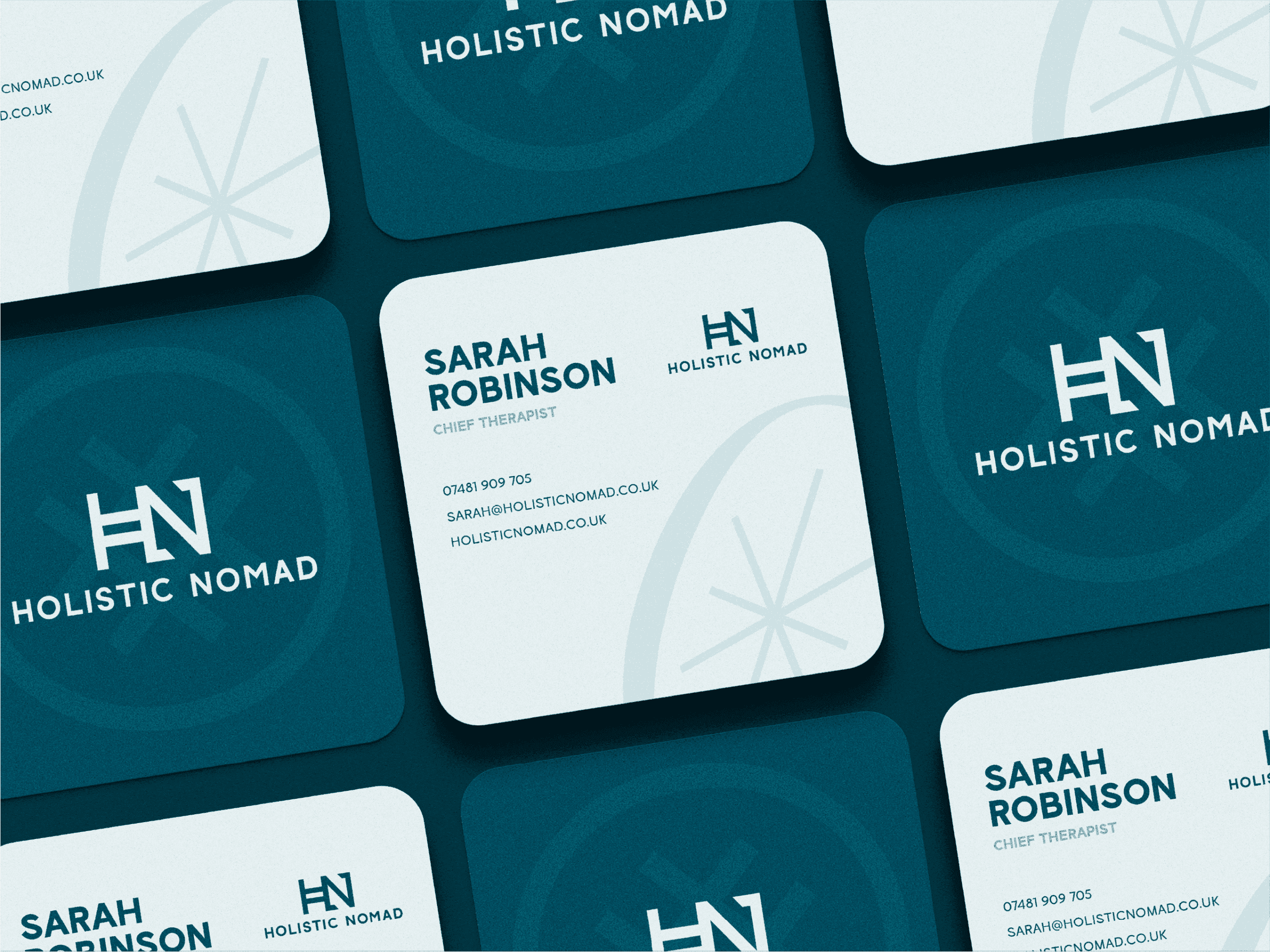
This is the approach we followed when working on "Holistic Nomad", a wellness platform that needed to balance a calm, intuitive front end with complex functionality behind the scenes. The project involved brand identity, website design, custom forms, map-based browsing and user-led filtering.
The visual result feels simple. The process behind it was not.
That is the point of a considered redesign: complexity should be handled by the team, not passed on to search engines or users.
The Challenge
A business may know that its website is outdated, difficult to manage or failing to convert. At the same time, it may depend on a small number of older pages for most of its organic visibility.
That creates a difficult question: how do we improve the experience without disturbing the foundations?
The most common fear is that a new design will cause Google to “forget” the site. That is not quite how it works.
A visual redesign on its own is not usually dangerous. The genuine risks appear when a rebuild also changes:
- Page URLs and URL structure
- Page content and search intent
- Internal links and navigation
- Indexing directives
- Canonical tags and structured data
- Site speed and technical performance
- The domain, hosting or content management system
Some changes are myths rather than threats. A new colour palette will not damage rankings. A sharper typeface will not remove organic visibility. Reworking a layout will not automatically cause a penalty.
However, deleting a page that earns traffic, replacing useful content with thin copy or launching a site with staging directives still active can create immediate problems.
The distinction matters. We do not avoid change. We separate creative change from SEO risk.
Solution
1. Audit what earns traffic before touching the design
Before we open a new sitemap or start exploring layouts, we establish a baseline.
We review data from Google Search Console, analytics platforms and a full website crawl to understand the current site as a working system rather than a collection of pages.
The audit should record:
- Organic clicks, impressions and queries
- Landing pages and their conversion contribution
- Priority keyword rankings
- Backlinks and referring domains
- Indexed URLs and status codes
- Existing title tags, meta descriptions and heading structures
- Canonical tags, robots directives and XML sitemaps
- Structured data currently in use
- Core Web Vitals across key templates
The most important pages are not always the most obvious ones. A service page with modest traffic may hold valuable backlinks. An old article may rank for a high-intent search. A location page may support visibility across an entire region.
We treat that information as a design brief.
2. Build a URL and redirect map
A redesign should preserve URLs wherever there is no strategic reason to change them.
When URLs do need to change, we map every old address to its most relevant new destination. This is not a spreadsheet exercise to complete at the end. It is part of the architecture from the beginning.
Each old URL needs a clear outcome:
- Keep it as it is
- Redirect it to one relevant replacement
- Consolidate it into a stronger page
- Retire it with a considered 404 or 410 response
A proper one-to-one 301 redirect passes users and search engines to the intended destination. A chain of redirects, old URL to temporary URL to final URL, creates unnecessary friction and makes the migration harder to interpret.
We also test for:
- Redirect loops
- Broken destination pages
- Irrelevant redirects to the homepage
- Missing redirects for high-value legacy URLs
- Internal links still pointing to old addresses
The homepage is not a universal replacement for every deleted page. Relevance carries more weight than convenience.
3. Preserve and improve content
Content is often the first thing removed during a visual rebuild. That is where many ranking drops begin.
The new design may look cleaner, but if it removes the words, context and depth that helped a page rank, the redesign has weakened its own foundation.
We do not treat existing copy as untouchable. We assess it properly:
- Does it answer the original search intent?
- Is it still accurate?
- Does it demonstrate the business’s expertise?
- Does it support the page’s commercial purpose?
- Can the structure become clearer without losing useful detail?
- Are there opportunities to combine overlapping pages?
Strong content should evolve rather than disappear.
That may mean rewriting introductions, improving headings, adding clearer explanations or moving important information higher on the page. It may also mean creating more useful supporting content around a core service.
The objective is not to preserve every sentence. It is to preserve the page’s purpose and improve its ability to serve both people and search engines.

4. Rebuild templates without breaking internal linking
A new template can improve hierarchy, readability and conversion paths. It can also quietly remove the internal links that helped search engines discover important pages.
This is why we review internal linking at the template level.
Navigation, breadcrumbs, related-content modules, service grids and footer links all contribute to how authority moves through a site. A beautiful new menu is not necessarily a useful one if it hides key pages or creates unnecessary depth.
We look for a balance between:
- A clear user journey and accessible page depth
- Consistent design and meaningful contextual links
- Flexible templates and controlled indexation
- Strong visual hierarchy and crawlable HTML content
The strongest redesigns make important pages easier to find for everyone.
On "Holistic Nomad", the interface had to support discovery, filtering and enquiry without making the experience feel technical. That same principle applies to SEO architecture: the system can be sophisticated, but the route through it should feel natural.
5. Protect speed and Core Web Vitals
Performance is not a finishing touch. It is part of the design.
Large hero images, heavy animation, third-party scripts and poorly optimised fonts can make a polished website feel slow. That affects user experience and can weaken performance across mobile devices and less reliable connections.
We benchmark the existing site, then test the new build across its main page types.
The key Core Web Vitals to monitor are:
- Largest Contentful Paint (LCP): how quickly the main content becomes visible
- Interaction to Next Paint (INP): how quickly the page responds to interaction
- Cumulative Layout Shift (CLS): how stable the layout remains while loading
The practical work includes compressing images, loading assets intelligently, reducing unnecessary scripts and reserving space for dynamic elements so the page does not jump.
A website design studio should not treat speed as something to fix after launch. The visual system, content system and technical system need to be developed together.

6. Preserve structured data and technical signals
Structured data helps search engines interpret what a page represents. During a redesign, existing markup is easy to lose. Particularly when templates, plugins or content management systems change.
Before launch, we inventory the structured data on the existing site and decide what needs to carry across.
Depending on the business, that might include:
- Organisation or LocalBusiness markup
- Article markup
- Breadcrumb markup
- Product or service information
- FAQ markup where it genuinely reflects visible page content
The principle is accuracy. Structured data should describe what is actually present on the page. It is not a place to add claims that users cannot see.
We also verify canonical tags, robots.txt, XML sitemaps and indexing directives. Staging environments should remain blocked from search engines, but those blocks must be removed correctly when the new site goes live.
7. Test, launch and monitor
A redesign is not finished when the new homepage appears online.
We crawl the staging site, test forms and check key page types across devices before launch. We then prepare a launch-day checklist covering:
- 301 redirects
- Page status codes
- Canonical tags
- Internal links
- XML sitemap submission
- Analytics and conversion tracking
- Robots.txt
- Structured data
- Mobile layouts
- Core Web Vitals
After launch, we compare performance against the baseline rather than reacting to one dramatic day of data.
Search engines need time to recrawl and reassess a changed site. We monitor Google Search Console for indexing issues, crawl errors, coverage changes and unexpected ranking movement. We also review analytics, organic landing pages and conversions over the following weeks.
A small fluctuation is not automatically a failure. A pattern of missing pages, falling impressions or traffic moving away from priority URLs deserves investigation.
The Outcome
The most reliable redesigns do not choose between visual progress and organic stability. They create a controlled path from one to the other.
A new website should feel more focused, more capable and more distinctive. Behind that visible change, the underlying search signals should remain deliberate:
- High-value pages are protected
- New URLs have clear destinations
- Content becomes more useful, not simply shorter
- Internal links reinforce the new architecture
- Performance is measured across real templates
- Structured data and indexing signals are tested
- Post-launch monitoring turns uncertainty into evidence
That is how we approach website design at Wetton&Co. Our work combines brand thinking, digital structure and technical care so the final experience does more than look better. It gives the business a stronger platform to grow from.
If a redesign is on the horizon, start with the evidence before the visuals. Bring the existing data, the difficult pages and the ambitious ideas. We can work alongside you to protect what already works while creating what needs to come next.
Pre-launch checklist
- Export organic traffic, rankings, backlinks and conversion data
- Crawl the existing website and save the URL inventory
- Identify high-value pages and priority templates
- Decide which URLs will stay, change, consolidate or retire
- Create and test a complete 301 redirect map
- Preserve or improve valuable content
- Review headings, metadata, canonicals and internal links
- Benchmark Core Web Vitals and page speed
- Check structured data across key templates
- Block staging from indexation
- Confirm production robots.txt and XML sitemap settings
- Test forms, analytics and conversion events
- Crawl the staging site before launch
- Submit the new sitemap in Google Search Console
- Monitor indexing, rankings, traffic and conversions after launch
Research references: Google Search Central, Pantheon’s SEO migration checklist, and Webflow’s site migration guidance.
Next Project → "Holistic Nomad": Brand Identity & Website Design