


A useful packaging design brief explains the product, customer, sales environment and practical requirements, then shows how the design needs to work across the whole range. That last part matters: a direction that looks convincing on one pack can become difficult to manage when flavours, sizes and formats multiply.
Before discussing colours or finishes, agree what the packaging must help someone understand.
Start with the purchase decision
Describe the moment your customer encounters the product. Are they comparing several packs in a shop, looking at a small product image online, or opening a delivery?
Each setting raises different questions. A shopper may need to identify the flavour quickly. An online customer may need to understand quantity and format from a thumbnail. A gift buyer may be looking for a sense of occasion.
Choose the most important information and put it in order. This gives creative work a purpose beyond “make it look premium”.
Build a range matrix
List every product that needs artwork, including the launch range and any likely near-term additions. For each one, record the product name, variant, pack format, size and sales channel.
Then separate the information that stays consistent from the information that changes. The brand may occupy the same position, while flavour colour, imagery and product name vary.
This simple exercise helps expose the real scope. Four flavours on one carton format are a different design task from four products using a pouch, sleeve, bottle label and display box.
Bring the supplier into the conversation
Share the supplier’s current cutter guides and specifications when available. Flag anything still undecided, including material, print process, finish and the area available for artwork.
Do not let a presentation mockup become the production specification by accident. A mockup communicates an idea; the artwork handover needs to follow the agreed supplier requirements.
Assign responsibility for final product copy and specialist approval. If barcodes form part of the pack, GS1 UK is a useful starting point for product identification and barcode guidance. Confirm the requirements with the relevant suppliers before finalising the artwork.
Give references a job
A moodboard becomes more useful when each reference has a reason. You might like the clarity of a product name, the confidence of a colour palette or the way variants belong together.
Explain what you want to achieve, rather than asking for another brand’s appearance. It leaves room for a direction that belongs to your product.
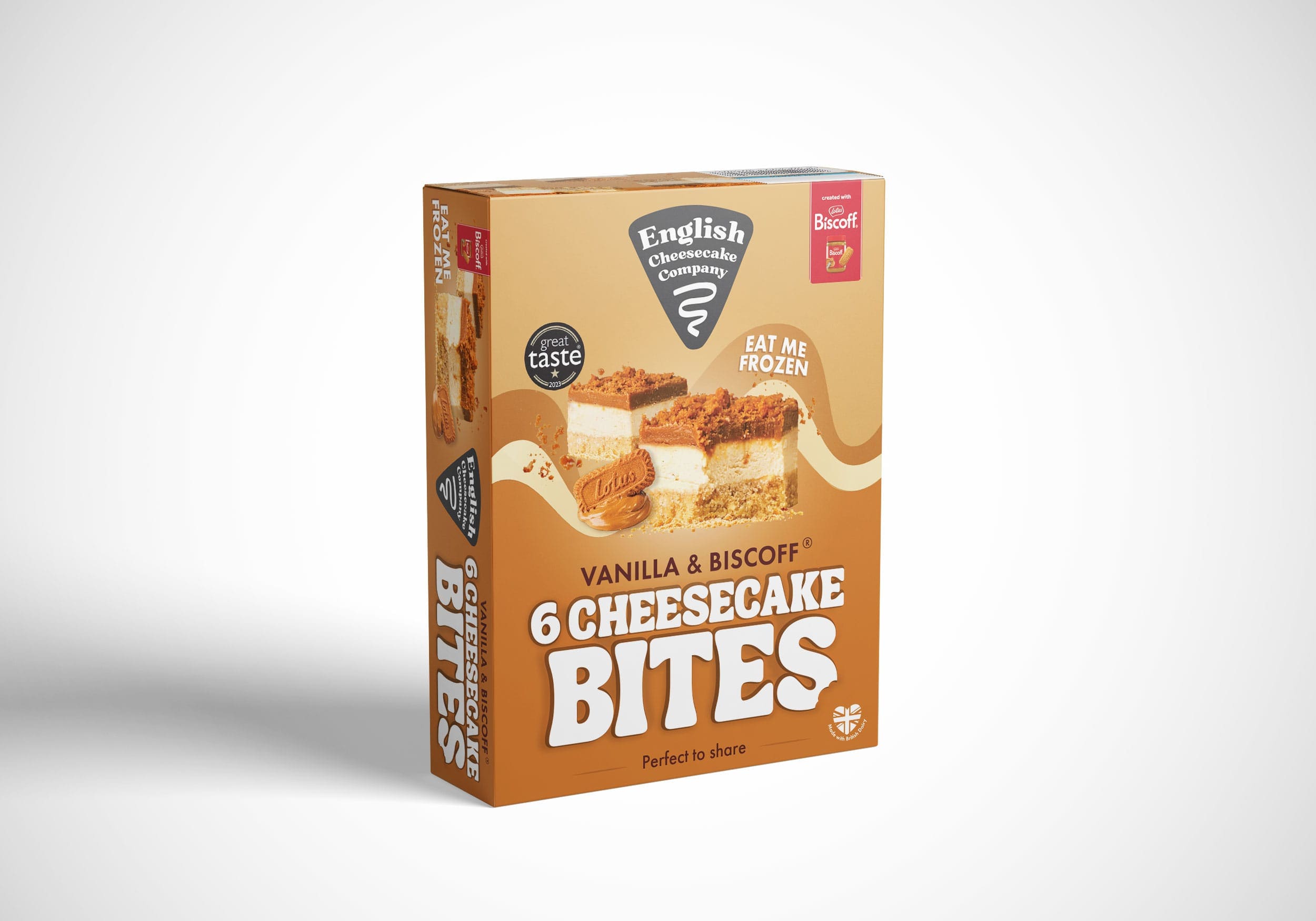
For a visual example, our English Cheesecake Company packaging project shows a flavour-led approach across a frozen dessert range. Use it to consider information hierarchy and variation, without assuming the same visual treatment suits every category.
Define what “finished” means
Agree the number of concepts, products, formats and revision stages. Clarify whether photography, illustration, copy, structural development and supplier liaison sit within the scope.
Name the person who can approve the direction and explain how feedback will be collected. A single consolidated response is easier to act on than disconnected comments arriving from several people.
Build the schedule backwards from the production deadline, leaving room for review and any supplier checks. The launch date alone does not tell the design team when final artwork is needed.
A practical packaging design brief
Finish this sentence for your project: “We need a packaging system for [products], sold through [channels], that helps [customer] understand [priority], using [formats], ready for supplier handover by [date].”
Add your product matrix, available brand assets, budget range and open questions. You now have the basis of a productive conversation.
Wetton&Co works with brands from Brighton, London and across the UK. Explore our packaging design service, then share the range you are planning and what needs to change.
Common questions
Can we retain our existing brand?
Yes. The brief can focus on a packaging refresh while preserving the identity. Identify which assets are fixed and which can evolve.
Do we need every detail before asking for a quote?
No, but mark unresolved decisions clearly. A quote is more useful when its assumptions and exclusions are visible.
